Saturday, October 26, 2019

red ribbon run

I had one of those beautiful days today at Hopi and just wanted to share it.

It started with an early rise at 7am with my father and stepmother who were visiting to get ready to help out at the Red Ribbon Run -- a community event that I've been involved with for the last 2 years to raise awareness for Substance Abuse Prevention.


From 8am-9am I helped out with one of the Health Center booths for education about opioids along with two really amazing students who are rotating with us right now at Hopi. We talked to dozens of people about opioids and played a game sorting pain medications as opioids vs non-opioids and talked about safe use, storage, and disposal of opioids and all the non-opioid ways to treat pain to reduce the risk of addiction and overdose.


This is part of a larger, very successful community initiative for opioid abuse prevention. The students were so fantastic at running the booth that I got to do a fair amount of mingling and visiting the other booths and socializing with friends, colleagues, and acquaintances and nourishing connections. The atmosphere was light despite the heavy topic as it was also a Halloween Fun-Run and everyone was in some pretty amazing Halloween costumes!


After the runners took off, I went in to the hospital for a few hours and took care of our hospitalized patients for the day -- all wonderful people with caring, supportive families. I got to flex my brain on some interesting medical issues, do some teaching, and then made it home for lunch with my father and stepmother.


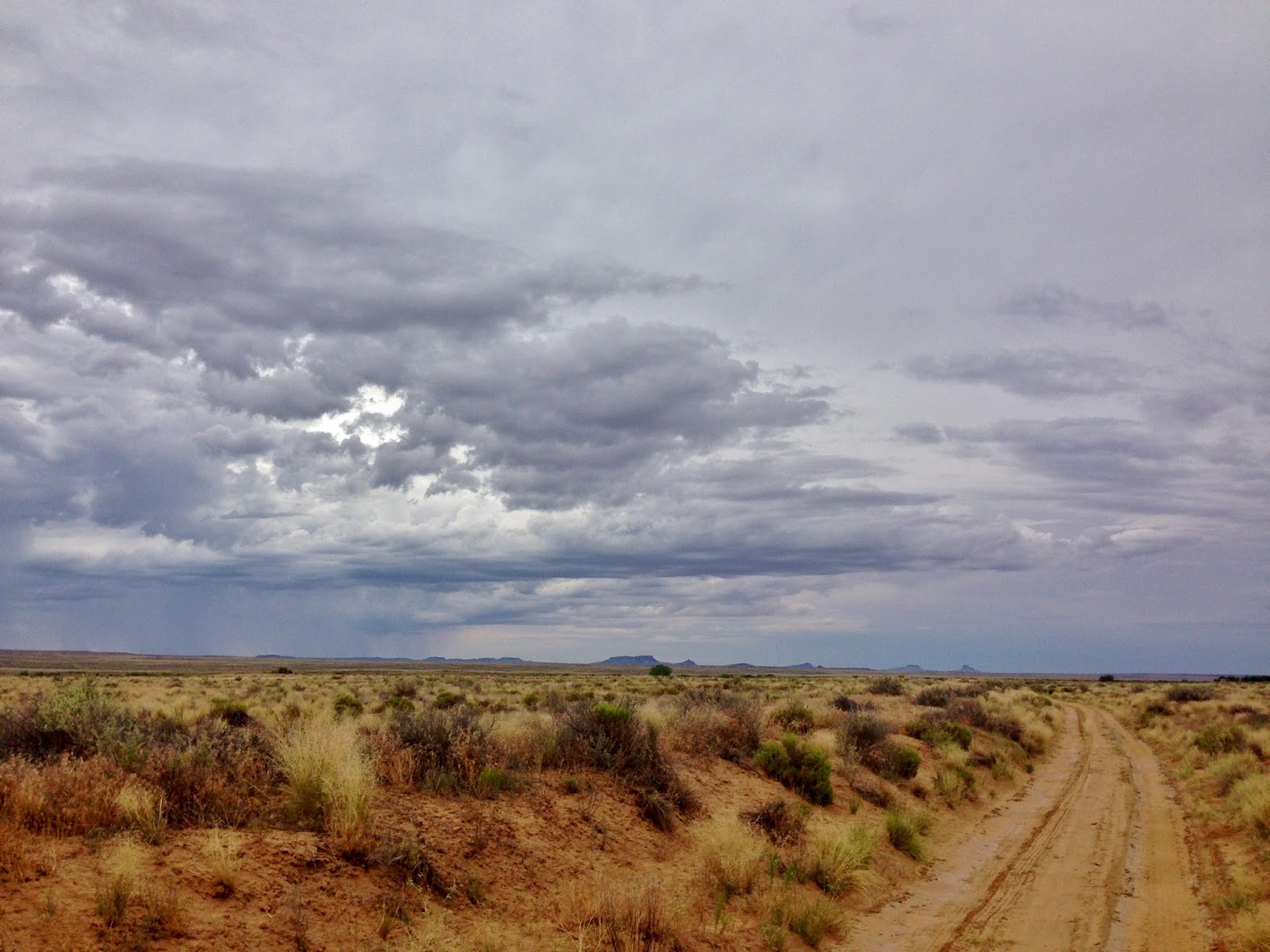
The afternoon was spent in the desert with my parents and overly energetic dog Talus, who finally got to burn off his energy playing fetch with my dad on the dirt road.


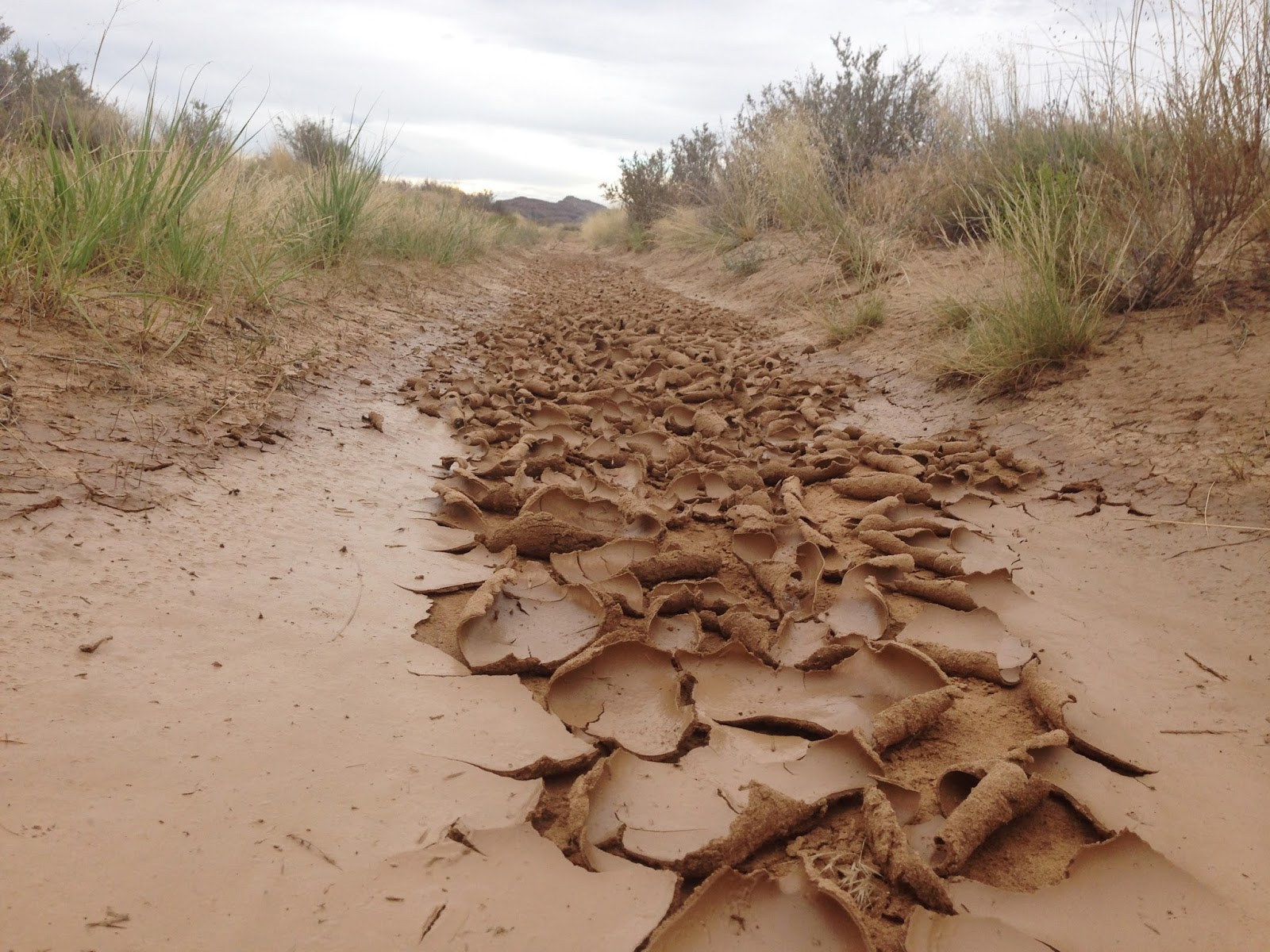
 I mistakenly left the house without water, and thought we'd be ok with it being a cool fall day, but 75 degrees in the sun got to be rather hot and we all got rather thirsty by the end. I showed off the wash and its crispy crunchy dried mud flakes, and we journeyed back in the heat with Talus soaking up all the shade he could find.

photo not from today -- but an example of the crispy crunchy dried mud surface of the wash

Walking back through the neighborhood, we weren't the only ones enjoying the beautiful Saturday and stopped and chatted with friends and neighbors a few different times before making it back and chugging some serious water together.

I went back into the hospital for a bit to catch up on charting and exchange some friendly banter with nurses and providers, and now am enjoying a quiet evening at home with Talus passed out on the couch (finally!).

One of those days that makes you stop and appreciate every facet of life and work here -- community, medicine, teaching, colleagues, the desert, the sun, and the stars.


Sunday, February 17, 2019

reflections and a new year

In the Hopi traditional calendar, December or Kyaamuya, is a time of quiet, reflections and stories. It is a time to reflect on the past year and what you want to improve upon in the coming year.

I like this idea of a reflective, peaceful time. A time to slow down and do less and think more.

What has 2018 meant to me? It was a good year with much to be thankful for. A job that is invigorating, challenging, ever changing, and meaningful. Smart, fun, kind, supportive colleagues. Time with family and to explore the Southwest. And an incredible partner in life, love, and outdoor adventure.

In December, Wade and I took a quick 2-night backpacking trip in our 'backyard park' of the Grand Canyon. We hiked down South Canyon to the Colorado River and spent two nights on the beach. Such are the short winter days at the bottom of the canyon that sunlight only hit the beach for around 4 hours that day, which Wade spent fishing and I spent writing. It was a bit chilly but such a beautiful route down and pleasant area to explore -- including a waterfall, a cave, and ruins.

The view from 'Stanton Cave', one of the many places we explored from our beach camp at the mouth of South Canyon
Mid-day sun lighting up the Canyon


December also brought some of the biggest snowfalls I've seen here at Hopi. Yes, it does snow in Arizona. How much depends entirely on the elevation. In Flagstaff at around 7,000 feet, it snows quite frequently, and even more in the mountains, enough to operate a ski resort. At Hopi around 6,000 feet we usually just get dustings that melt within a day or two at the most. But in December we got a few snowfalls that accumulated and stayed and it was beautiful.

My neighborhood of adobe homes after a winter snowstorm

Hiking through the desert snow

Sunset colors peak and sparkle on the snow
And then January came, a new year with new beginnings, and a new outdoor destination. Wade and I venture often to the Grand Canyon as it is close enough to be our 'backyard park' and offers a lifetime of new places to explore. When we had a little longer stretch of time off together in January, we decided to take the plunge and do something different and instead ventured to a National Park in our neighboring state of California -- Death Valley. I imagined Death Valley as an big, flat, hot desert -- but discovered that couldn't be farther from the truth. It does indeed have valleys below sea level which are exceedingly hot in the summertime, but these same valleys are actually quite cool in the winter. It is also the largest National Park in the lower 48 states and includes multiple mountain ranges with some mountains over 10,000 feet tall, dozens of canyons, Joshua tree forests, and moving rocks! We spent a week there and saw all of these and more in a tiny fraction of the park.

We spent most of our trip in the vicinity of Racetrack Valley, an expansive mudflat with a few rocks scattered on its surface, some of which have tracks stretching into the distance, a record of their movement across the mudflat over time. For a longtime the mechanism of their movement was a mystery -- wind? water? aliens? The, in the winter of 2013-2014, scientists set up an experiment and observed how rocks move rocks move when sheets of ice form over a shallow water pond and are blown by the wind and push the rocks and the mystery was solved. 

an example of a few of the rocks with their tracks extending hundreds of feet towards the horizon

The view from a saddle on our approach to Racetrack Valley on our backpacking trip

fun with shadow pictures in Racetrack Valley
 The other highlight of the trip was soaking in the natural Saline Valley hot springs. It is a true desert oasis with palm trees, outdoor showers, and many soaking tubs with views of the surrounding mountains during the day and stars at night. The place is truly remote, gorgeous, free, and exquisitely maintained by the communal efforts of volunteers. We made our way there at the beginning of our trip, and had to make time to go back again after our backpacking trip before leaving the park.


 And lastly, both Wade and I got to see Joshua trees for the first time. The Joshua tree forests appear almost like something from a Dr. Seuss book, they are so different from other trees and each one is so unique in shape.

January and since come and gone, and now February is here, bringing me to Phoenix for an acupuncture training, another new beginning for me for this year. I've always been interested in traditional medicine modalities of all sorts, and this form of Traditional Chinese Medicine has started to get more mainstream recognition, especially in its role for pain treatment in the era of realization of the risks and harms of opioids for chronic pain. I'm now midway through a 6-month course for medical providers to learn acupuncture therapy and it has been quite thought-provoking for me around concepts of health, medicine, healing, evidence, and patient-provider relationships.  More on that to come...

Sunday, July 15, 2018

Monsoons

"There are two easy ways to die in the desert : thirst and drowning"  - Craig Childs, The Secret Knowledge of Water

This winter was exceptionally dry in Northern Arizona . Forest fires raged in many forests in the area throughout the summer. Most towns and cities canceled their 4th of July fireworks due to danger of starting more forest fires. The majority of the National Forest around Flagstaff where I and so many others regularly go hiking was closed off to the public for the last several months. And it has been a terrible year for the Hopi dry farmed corn which depends on winter moisture deep in the soil to sustain the plants until the monsoons. Many plants have not come up at all.

And now, at long last, the monsoons are here. The forest is open around Flagstaff.
view of the 'peaks' from national forest trail as the mountains near Flagstaff are affectionately known
 While the rest of the country has four seasons, here in Arizona there are really five: fall, winter, spring, summer, and monsoon season. The monsoons peak mid-July through mid-August and are very different from the thunderstorms I am used to in the Midwest. Storms roll through and drop large amounts of rain in just a few minutes, and may completely miss an area just a mile away.

The arrival of the monsoon means many things. My garden that has been limping along is about to take off, along with weeds that will soon outnumber my plants. Roads will be washed out or muddy and make transportation difficult or impossible for many of my patients. There will be flash floods in towns, canyons, and washes, like the one in Flagstaff today. The mosquitoes will be here in a few weeks, just for a few short weeks.

But for now, I am thoroughly appreciating the first storms to come through Hopi this year:

The washes are flowing 

the storm clouds are incredible to watch in the open desert
and the monsoon sunsets are unlike any other

with the vibrant colors in the sky lighting up the puddles behind my house

Thursday, December 21, 2017

Second mesa sunsets

Last night I walked into my spare bedroom, and this is what I saw through the window:

Clouds aglow behind the Walpi housing complex
 I grabbed my family who was visiting and we walked across the housing complex and watched the end of the sunset over the San Francisco Peaks:


I have never seen sunsets anywhere else like the ones I have seen in the last year since moving to the Hopi Reservation. Every day that I am able, I like to take a walk in the desert around sunset because it never disappoints. I thought I'd take this chance to share some of the photos I've taken of sunsets here, all of them from within a mile of my house. 

Sometimes there are no clouds and the sky lights up the silhouette of the mountains

Sometimes there are wispy clouds

Sometimes the clouds are thicker.
In the summer, the sun sets behind Second Mesa instead of the San Francisco Peaks. 

Did you know that if you turn around and face East, in the opposite direction of the sunset, is another display of color?

It is like a reverse sunset. Yellow on top, then orange, then red, then blue.
Sometimes these colors make me want to paint them!

Sometimes my sunset walks take me on the other side of the health center.

And sometimes a photographer friend happens to be there to make a picture of me making sunset pictures!
Photo credit: Christina Gomez-Mira

This has been rather more of a photo-album than a blog post, but I think the sunsets speak for themselves. I am ever so grateful to be here in this place enjoying these colors, taking in this space, and breathing this air.


Sunday, November 12, 2017

bedside ultrasound in the Southwest

In the Hopi Emergency Department, and many emergency departments across the country, when it is outside of business hours, our laboratory and radiology technicians (the people that can run the blood tests and take the x-rays or CT scans) are on call and 40-minutes away.

What if there was a tool that would allow us as providers to look inside your body right there in the room with you, 'at the bedside', and find out what is wrong without calling anyone in from home and without exposing you to any radiation?

We are realizing more and more that we already have this tool -- ultrasound -- and if we learn how to use it properly it can be incredibly powerful. Ultrasound uses sound waves to look inside the body. Most people are familiar with the use of ultrasound for pregnant women to look at their babies and how they are developing, but it has many many other uses.

I was fortunate to have had some amazing mentors in my residency program who trained us all in bedside ultrasound right at the beginning of our 3-year residency program and allowed interested residents, myself included, to do an elective in our third year to get much more hands-on experience with ultrasound. 

I love ultrasound for many reasons. First, it is quality time spent with a patient. I love to show someone their kidney, or gallbladder, or liver, or pregnancy, or veins, and either reassure them that they are OK or show them what is causing their problem, and patients to look at the pictures with me. Second, it is very cost effective. Ultrasound machines are a bit pricey, but once you have the machine it can be used over and over, so in the end it is cheap, easy, portable, and sometimes saves unnecessary expensive tests, radiation, or transfers to another hospital.  Third, it s so fun to teach. I have had the opportunity to help teach courses at my own residency, at a Global Health conference for family physicians, and most recently at a nearby Indian Health Service facility at Zuni.

This last weekend, after running in the middle of the night and again early morning in the Ragnar race in Phoenix, I drove out to Zuni, New Mexico and had a wonderful Contra Costa Family Medicine reunion with a couple of former co-residents and a couple of our ultrasound mentors in the setting of a two day course they were putting on for bedside ultrasound for Indian Health Service providers.

IHS-Contra Costa bedside ultrasound champions
I had been doing quite a bit of bedside ultrasound before, but after these recent courses my excitement and awe of the potential of ultrasound has been elevated even more, and I'm working on mentoring other providers at Hopi to be able to answer some simple questions with a bedside ultrasound: Is your leg swelling from a blood clot in your veins? Is your stomach pain coming from your gallbladder? Has a pocket of pus formed in your skin infection that I need to drain?

Sometimes, the answer to one of these questions can make all the difference for a patient's care. 


Friday, October 6, 2017

Running the mesas, the deserts, the mountains

Since moving to the Hopi Reservation last fall, I feel a sense of coming full circle on my path to running.

I hated running as a child, and only came to it as an adult, around 10 years ago on Pine Ridge Reservation in South Dakota when I started running simply because I felt cooped up from physical inactivity. So I started running on the gorgeous rolling plains of South Dakota. It took several weeks for me to build up the ability to run a mile or two, and then, for the first time, it actually felt good and I was hooked.

Rolling grassland of Pine Ridge reservation. I learned to run on this gravel road.  
Since then, I've kept running a part of my life, at least in some way, and it has become a sanctuary to get outside, to move, to clear my thoughts, to feel my heart pounding and my lungs burning. I've received some puzzled glances from local communities as I ran on the beaches of a Garifuna village in Honduras and the dirt paths of the Rainforest in Peru.

And then, one year ago, I moved to the Hopi Reservation in Northern Arizona, and incidentally found myself in a place where not only do I not receive any puzzled glances when I run, but where I am completely amazed and humbled by the running tradition and culture of the Hopi people.

The Hopi have a long tradition of running, and maintain that tradition to this day, through ceremony, sports, and everyday life. In 1912, a Hopi runner named Louis Tewanima won a silver medal in 10,000 meter race, setting a US record that would stand for 52 years. There is now an annual 5K and 10k race in his honor, which I had the honor of participating in earlier this month. http://www.tewanimafootrace.org/about.html

At this, and many other races I have attended, Hopi people of all skill levels and all ages, from elementary school children to grandmothers and grandfathers, come out to run together, and cheer eachother on: "nahongvita" or 'stay strong'. There are running trails all over the reservation, looping around all the villages, up and down the mesas. The Hopi Wellness Center runs an annual "100 mile Club" which encourages participants to run or walk a total of 100 miles over the course of the summer.
Running trails behind the Wellness Center
In one other impressive example of the ongoing culture of running, the Hopi High School boy's cross country team has won the state championship in their division for the last 27 years in a row. Here's a New York Times Article and an ESPN SC featured video about the team and its legacy if you are interested.

It has been truly amazing to be a runner and be surrounded by such a deep, rich, running culture.


This fall, I've joined an eight-member team of mostly Hopi staff members of the hospital for a 2-day trail relay run in November 3-4 at McDowell Mountain Regional Park outside of Phoenix. We'll each be doing three legs spanning day and night for a total of 15.4 miles each or 123 miles total. It'll be a fun time and a good challenge for all of us, but we are also doing it as a fundraiser for the Unite to End Violence Native Women's Empowerment, a small grass-roots organization that organizes a run on the 25th of every month to raise awareness about domestic violence and works to support survivors.

Example care package for survivors of domestic violence
We're collecting donations to Unite to End Violence via this gofundme page if anyone would like to contribute.

Saturday, July 29, 2017

a new understanding of water

“How could a place defined by the absence of water be defined by the presence of it?” --Craig Childs, the Secret Knowledge of water.

When I chose to move to Arizona, I gave little thought to fact that I was moving to the desert or how radically different this would be to any other climate in which I have lived. In the last nine months, I have become so much more aware of water: when and how I drink it, when and how and how much falls from the sky, how it defines the landscape and living creature’s relationship to it. I'm including a few quotes from a book "The Secret Knowledge of Water" by Craig Childs which express much more eloquently than I could some essential concepts around water in the desert. 

Each time I go into town for groceries, I also load up the back of my car with empty gallon water jugs, which I fill with tapwater in Flagstaff and bring back. This is a choice I make because the water that comes out of my tap comes from local groundwater that naturally contains arsenic, at slightly above EPA recommended levels. I then watch the water jugs empty themselves, about one per day, for my cooking and drinking water, until I get a chance to replenish them.

And this is only at home – when I go hiking or backpacking in this area, planning water sources is much more critically important. In the desert, there are a few types water sources: springs, streams/rivers, and potholes: natural depression in rock which fill with water and, depending on the size, remain filled for a matter of days or up to weeks to months if they are large enough. 

Pothole water in the Grand Canyon
Spring in the Grand Canyon
All of these but the largest of rivers and potholes are seasonal, and can be found completely dry in the summertime, making careful research, planning, and budgeting of water essential. I recently went on an overnight backpacking trip in the Grand Canyon where none of these water sources would be available, so we each carried 11-12 liters of water (around 25 lbs). That is a heavy load!

Colorado River at the bottom of the Grand Canyon -- always has water, but hope it to be clear like this not muddy after a rain!
Much more dramatic than my own personal relationship with water, is the way in which water defines the natural environment here. Surely the natural springs on the mesas at Hopi played a role in their settlement here over one thousand years ago. In some of the villages, you can still see the natural potholes dug deeper by ancestral Hopi to store water on top of the mesas. And to this day, the Hopi perform ceremonies and dances to bring the rain their crops need to survive and thrive. When the rains come, they seem to be another entity altogether from the rain I am used to anywhere else. The open landscape allows you to see for miles in any direction, and see storm clouds dumping rain and lightning in a patchwork of places with some areas left bone-dry in between.

It's raining on the buttes in the distance, but not on the road i'm walking


Which brings me to the flipside of water in the desert: its momentary abrupt abundance and resulting floods. In the space of a few minutes, flash floods can turn a dry rock channel into a living, seething, roaring river with water and rock defining one another: “the shape of the canyon is the shape of moving water, and the shape of water, like the canyon, will amend to the slightest bias. While resisting and accommodating each other, water and canyon both become patterns of the same intelligence.” --Craig Childs, the Secret Knowledge of Water.

Dark Canyon in Utah, carved by water
Closer to home is the sandier version of canyons: the numerous ‘washes’ that meander across the Hopi and Navajo reservations. They appear as dry creek bottoms, lined with cottonwood trees, and fill with water only for short bursts of time, but enough to define their physical paths and resulting ecosystem. Paved roads have bridges with signs marking the wash as if it were stream or river (which is sometimes); unpaved roads simply go through the washes, sometimes heralded by a “do not enter when flooded” sign.  Families that live off of some of these dirt roads not infrequently find themselves trapped, unable to venture out from their homes to town, work, or appointments at the health center due to mud or a flood.

Mud cracks as it dries the day after a rain

To say that the desert has no water is a tantalizing misstatement. It is believable. But to look over this raven land and know the truth – that there is immeasurable water tucked and hidden and cared for by bowls of rock, by sudden storms, by artwork chiseled hundreds and thousands of years ago – is by far a greater pleasure and mystery than to think of it as dry and senseless as wadded newspaper. It is not only drought that makes this a desert; it is all the water that cannot be seen.” --Craig Childs, the Secret Knowledge of Water.